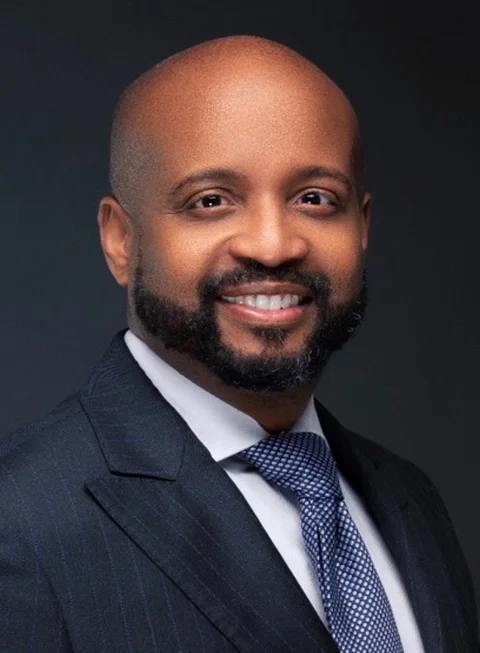
Make History with IQ and EQ is Dr. Kester Crosse's talk on pairing academic ability with emotional intelligence, and this past weekend he delivered it to a Kappa League chapter, the Kappa Alpha Psi youth leadership program for young men in grades 6 to 12. The research says he is early on purpose: students taught social and emotional skills gain an average of 11 percentile points in academic achievement (Durlak et al., Child Development, 2011).
The shirts were pressed, the ties were crimson, and most of the room could not drive yet.
This past weekend Dr. Crosse took Make History with IQ and EQ to a chapter of Kappa League, speaking to young men from middle school through high school. His own report afterwards was two words long: it "went very well."
It is the same argument he makes to university audiences, moved ten years earlier, which is where it belongs.
The room he was standing in
Kappa League is the youth leadership program of Kappa Alpha Psi Fraternity, Inc. It was founded on 12 February 1969 by the fraternity's Los Angeles Alumni Chapter at Alain LeRoy Locke High School and adopted nationally by the Grand Chapter the following year. It runs under Guide Right, the fraternity's national service program in place since 1922, and it gives young men in grades 6 through 12 educational, occupational and social guidance, delivered by professionals from their own community.
That last part matters more than the curriculum. MENTOR's report The Mentoring Effect (2014) found that young people facing an opportunity gap who have a mentor are 55% more likely to enroll in college than peers without one. A Kappa League Saturday is the mentor gap being closed in real time: men who walked the path, standing close enough to be asked questions.
The slide that told the truth
One slide on the screen was titled "Reasons Middle School and High School is Harder Today," and it did not flatter anyone's nostalgia: school never ends, embarrassment can go viral, popularity has a score card, bullying is 24/7, sleep competes with your phone, your attention is under constant attack, adult topics hit in middle school.
None of that is rhetoric. Pew Research Center's 2022 survey found that 46% of US teens aged 13 to 17 have experienced at least one form of cyberbullying, and the share of teens who say they are online "almost constantly" has roughly doubled in a decade, to 46%. The school day used to end at the gate. Now it rides home in a pocket.
Talent will open the first door. For a thirteen year old the first door is still years away, but the habits that keep doors opening start now.
Why EQ cannot wait for the first job
The standard move is to treat emotional intelligence as finishing school: something you pick up at twenty-three, after the degree, once the "real" skills are in place. The evidence runs the other way. A meta-analysis of 213 school-based programs covering more than 270,000 students found that students explicitly taught social and emotional skills gained an average of 11 percentile points in academic achievement over peers who were not (Durlak et al., Child Development, 2011). EQ is not the garnish on the report card. It moves the report card.
That is the Open Doors position compressed to one room: talent is not enough, and the four things that carry a career, captured in the TEEE Score, are learnable, which means the earlier the better. A young man who learns to read a room, manage a setback and follow up at fourteen is not getting a head start on charm. He is getting a head start on everything the transcript cannot show.
One message, every room
This is what the season looks like from the stage: a Kappa League chapter on a weekend, a university classroom on a Tuesday, a four hour emotional intelligence session for The 40 Acre Series on 18 October, the Honors College at North Carolina Central on 4 November. Middle schoolers to honors undergraduates, the message does not change, only the examples do.
That range is deliberate. The gap this work addresses is national, and so is the calendar. If you direct a youth program, a chapter, a school district or a campus series anywhere in the country, the formats and availability are on the speaking page.
Bring this talk to your program
Dr. Crosse speaks nationally: youth programs, chapters, school districts, campuses and corporate rooms. Check a date and see the formats available.
Frequently asked
What is Kappa League?
Kappa League is the youth leadership program of Kappa Alpha Psi Fraternity, Inc., founded on 12 February 1969 by the Los Angeles Alumni Chapter at Alain LeRoy Locke High School. Part of the fraternity’s Guide Right service program, it provides educational, occupational and social guidance for young men in grades 6 through 12.
What is Make History with IQ and EQ?
It is Dr. Kester Crosse’s talk for students on pairing academic ability with emotional intelligence: reading a room, handling setbacks, building relationships and following up. He delivers it from middle school programs through university audiences.
Why does emotional intelligence matter in middle and high school?
A meta-analysis of 213 school-based programs covering more than 270,000 students found that students taught social and emotional skills gained an average of 11 percentile points in academic achievement (Durlak et al., Child Development, 2011).
How can a program book Dr. Crosse to speak?
Through the speaking page at opendoorssuccess.com/speaking. He takes engagements nationally, from youth programs and chapters to universities and corporate audiences.