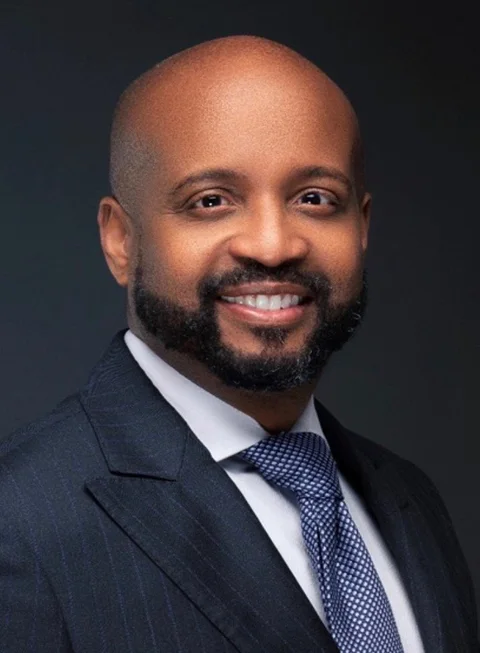
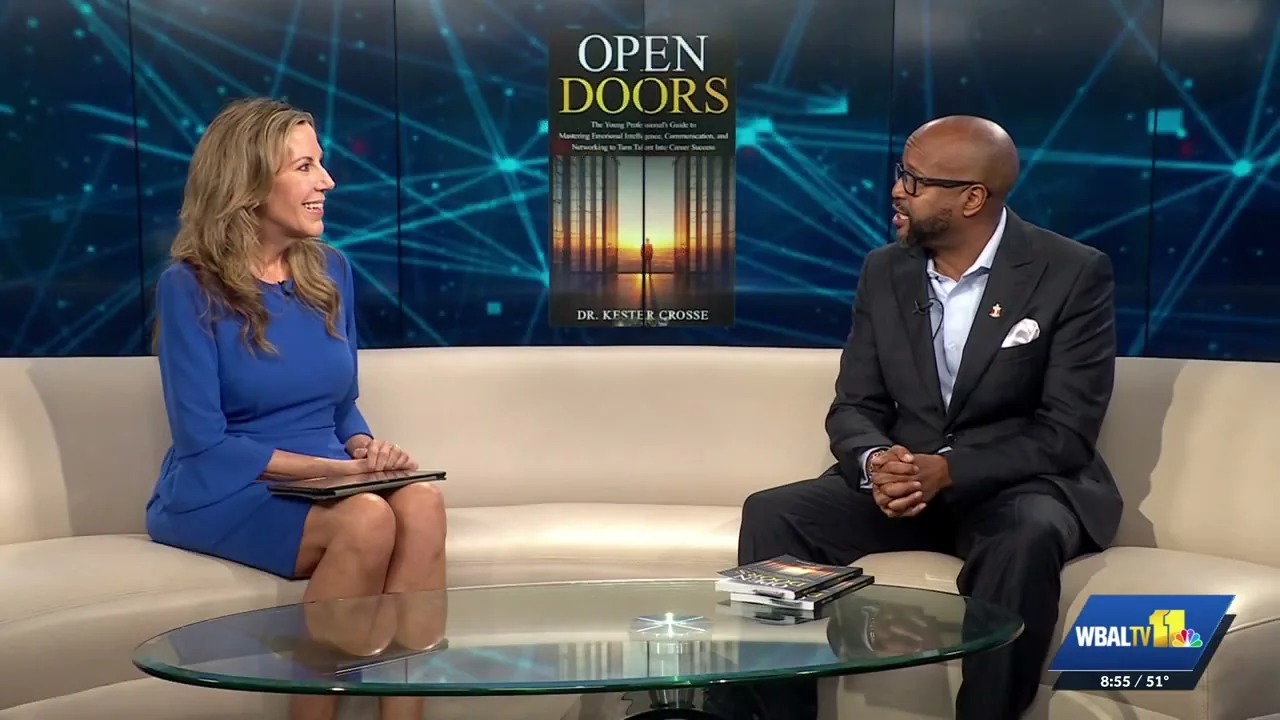
On WBAL-TV 11 News on 31 October 2026, Dr. Kester Crosse told Baltimore viewers that "talent opens eyes, but people skills opens doors," and that the skills come from practice, not from a phone. His advice to parents: teach your kids to introduce themselves, let them make their own appointments, and let them struggle.
Saturday morning in Baltimore, the question on the couch was one every family is living with: what happens to young people's social skills when technology does so much of the talking?
Dr. Crosse joined Jen Franciotti live on WBAL-TV 11 News to answer it. His opening line is the thesis of the book: "Talent opens eyes, but people skills opens doors."
The gym where nobody lifts
"Confidence comes from practice," he said. The trouble is that technology now does the practising for people. "It's like going to the gym and not lifting any weights. You can go every day. You don't get stronger." His generation, he pointed out, never had the choice: "We had to meet people. We had to call people." Young people today can avoid both for years. His rule is the same one he gave on 13News Now: use the technology as a tool, but do the work yourself.
Anxiety, he argued, mostly comes from not practising. So the fix is reps: walk into rooms, meet people, and have something to ask. His starter kit is the FROM method from chapter seven of Open Doors: where someone is From, their Recreation, their Occupation, their Motivation. "Talk less, listen more. People remember how you make them feel. Make people feel heard. They like you. That's empathy." Reading the room is a skill, and like every skill on this list it takes practice.
The competition is in their phone. And you can't open a door looking down at your phone.
Score yourself first
He walked viewers through the TEEE Score: rate yourself one to ten on Talent, Energy, Effort and Execution. Talent alone is not the job. "People hire, promote folks that they connect with, people they trust. And trust comes from time and consistency." Employers say the same: the National Association of Colleges and Employers finds communication rated essential 96% of the time, but new graduates rated proficient only 54% of the time.
Three things for parents
The book is written for high school students, college students and young professionals, and he was clear that parents are part of the plan. The younger you learn it, the more time you have to practise. Three jobs to hand back:
- Teach the introduction. First and last name, eye contact, a real handshake, phone in the pocket.
- Let them make their own appointments. From high school on, the calls are theirs to make.
- Let them struggle. Remove the unnecessary hardships, keep the rest. "If you do everything for your kid, when you try to pull back when they go to college, guess what? That anxiety catches fire."
It is the case he made in Every Struggle Is Not a Parenting Failure. Feeling good, he said, does not make anyone stronger: "You get stronger from resisting." And the payoff is real. Practise with your kid, he told parents, and they "will outshine the competition, because the competition is in their phone."
Watch it, share it
The full segment is on WBAL's site and on the Watch page. Start practising the frameworks in the companion workshop, or bring the talk to your school or team through the speaking page. Jen Franciotti's verdict on air: he should do motivational speaking. He does. A companion piece on the interview is in the Smith App Studio Journal.
Score yourself, like he said on air
Talent, Energy, Effort, Execution. The TEEE Score takes four minutes and shows which one is closing doors for you.
Frequently asked
What did Dr. Kester Crosse say on WBAL-TV 11?
On 31 October 2026 he told WBAL-TV 11 News that talent opens eyes but people skills open doors, that confidence comes from practice, and that technology should be a tool rather than something that does the work for you.
How can parents help kids build social skills?
Dr. Crosse gave three steps: teach your kids to introduce themselves with their first and last name and eye contact, let them make their own appointments from high school on, and remove unnecessary hardships but let them struggle so they get stronger.
Who is Open Doors written for?
Mainly high school students, college students and young professionals. Dr. Crosse says the younger someone learns these skills, the more time they have to practise them, and parents can practise alongside their kids.
Where can I watch the WBAL-TV 11 interview?
The full segment is published on wbaltv.com under "Advice from a local author on building social skills in a technologically driven job market", and linked from the Watch page on opendoorssuccess.com.